Classic adventure trekking and yesteryear exploration
**This page is a work in progress, with the itinerary worked out but not yet listed in full here.**
Using knowledge built up over seasons of traversing this forgotten area, this is our unique exploration from the edge of Zanksar across the wildest, most remote part of sublime Rupshu.
"Zanskar, the ‘Land of White Copper’, is a land where fairies congregate. A land of black wolves and blue poppies, ibex and snow leopards, glaciers and tundra, of howling winds and freezing cold. A land populated by spirits and monks, maidens and archers, a land with cave monasteries and fast streams in which gold is found, along with that famous white copper which gave the place its name. Zanskar is a land with two kings who still lord over a feudal peasantry, the highest inhabitants of our planet. This land truly exists, yet one could search a long time to find its name on a map. [and the name 'Rupshu' still!] ... ‘Unexplored’, mentioned the Indian Gazetteer at the beginning of the century, and strangely enough in 1976 one could have written nearly the same thing, for no one has studied the area, which at best gets a passing mention in the work of the few travellers to other Himalayan districts such as Ladakh. Yet the Kingdom of Zanskar was founded in the year AD 930, a hundred and thirty-six years before William conquered England, all this being well recorded in Tibetan texts, as I was to discover."
Michel Peissel's opening in his classic "Zanskar, the Hidden Kingdom", published in 1979 which can be downloaded here.
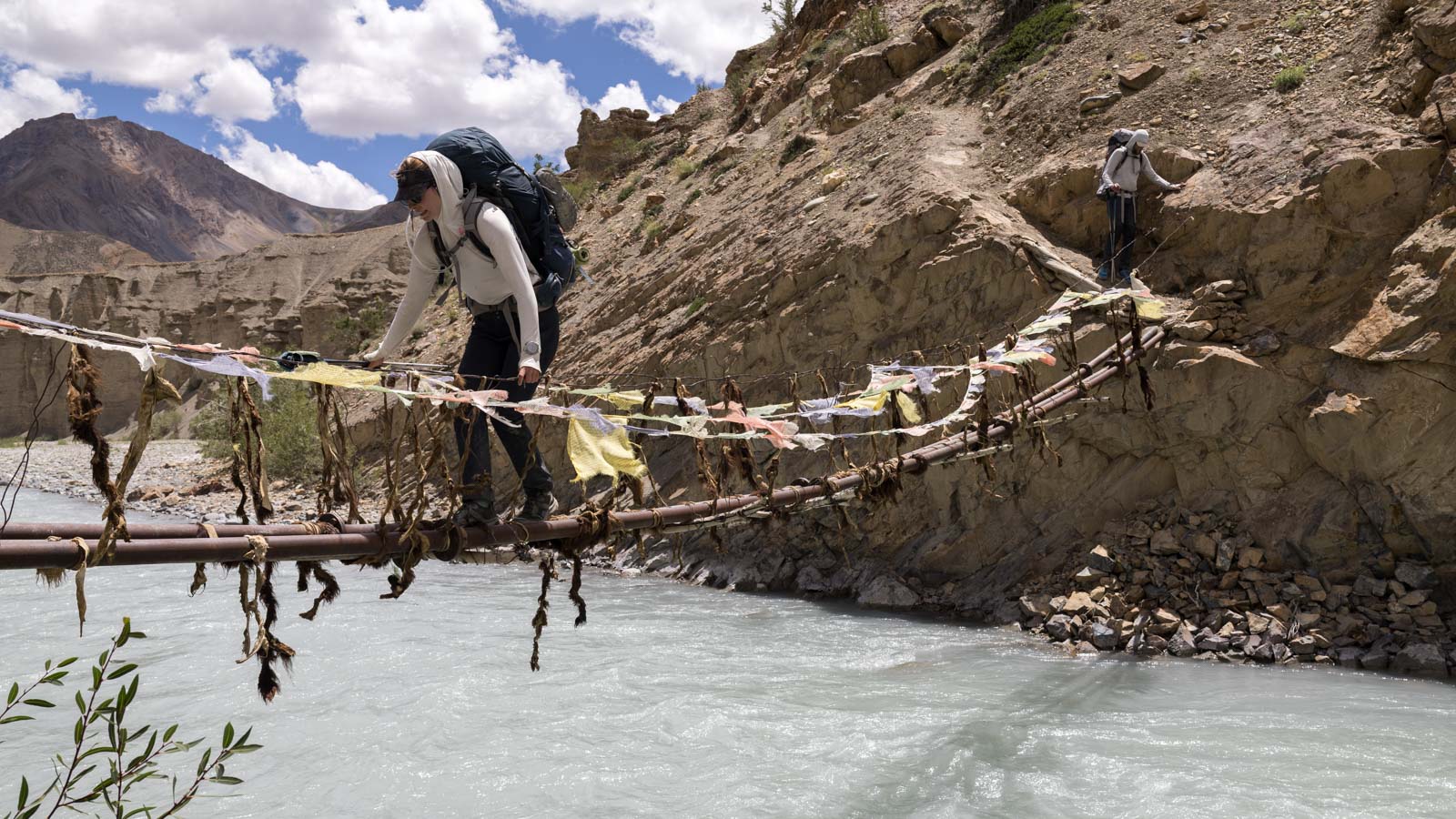
Paying homage to where the Tsarap Chu merges into the Zanskar river (can we reach that old bridge of memories?), we begin from famed Phuktal Gompa and trek to the most delightful Zanskar village of Shade, familiar to many of our previous trekkers. We continue over the panoramic twin passes as it is briefly impossible to follow the river, to then traverse mostly slightly above the river on a delightful, scenic trail.
At a village barely visited by outsiders (ie less visited than Shade!), we resupply nearby and head into most remote Rupshu, only traversable for a couple of months of the year. It is an area so wild, we will be the first humans that many of the animals have ever seen. Previously, we have watched kiang ponder us, fascinated.
At the headwaters of the Tsarap Chu, there is a mystery. Are there long forgotten passes? Regardless, our exit is over another bygone pass that only we have crossed this millenia. The last barrier is the formidable glaciated Parang La to Spiti.
This is a rare journey at the very best time of the season and regardless of whether exploratory or not, a most impressive trek in its own right.
2027 Pin Parvati
The above Rupshu trek finishes at Kibber, which is a (familiar) week-long road trip out to Shimla-Delhi, or a long day's driving to Manali. So instead, after recovery and a brief drive, we continue trekking on the classic Pin Parvati from Spiti to Manali, from desert to lush forests at the best time of year. Why not?!
Insurance, India visa, international flights, equipment rental, alcohol and soft drinks, laundry,
tipping and other items of a personal nature
Tips & extra cash
allow approx $250 for meals
we suggest 5% of the trip cost for the crew tips pool
Day 0 - arrive Delhi
Do plan your Delhi arrival time well, considering your morning flight to Leh. We are happy to assist planning and, if you arrive in Leh early, we provide transfer and hotel booking.
Day 1 - Tuesday 22 August 2027 - arrive Leh 3480m
Look for a Project Himalaya sign with our driver then Jamie will meet you at the hotel. Take it easy today.
2-3 - Leh 3480m
The impressive gompas and monasteries must be experienced.
4 - drive Padum 3550m
We drive the new Chadar Highway to Padum or further.
5 - drive Purne, Phuktal, trek camp
Can we cross the bridge where the Tsarap Chu meets the Zanskar? Then we explore fabled Phuktal and meet our crew to trek to the first camping place beyond.
6 - trek Shade village 4220m
A scenic day's walking including that classic bridge crossing.
7 - rest-explore Shade village 4220m
At this remote village, we watch the locals milking the naks and baby yaks.
8 - trek Kim's High Camp 4420m
Initially returning on a familiar trail, we position ourselves for the tomorrow's crossing.
9 - trek Normoche 4000m via Nialo Kontse 4850m & Gotunda La 5100m
The panoramic traverse between these passes must be experienced to be believed.
10 - trek Satok 4030m via Zara Chu
We traverse slightly above the Tsarap Chu (river) to this abandoned village, crossing the Zara Chu by fording it or by a bridge.
11-14 - trek Chumik Giarsa
With several possible intermediate camping options, we reach this barely visited village and have a rest day too.
15-24 - Rupshu exploration
We follow the crystal blue Tsarap Chu in a somewhat familiar oh-so-scenic valley then explore up and perhaps eventually reach the Parang La Base Camp.
25 - trek Takling via forgotten pass 5252m
This pass discovered by Jamie doesn't exist correctly on any maps and does not appear to have been crossed by anyone other than wild animals in the last several decades.
26-27 - trek Tharang Yogma 4750m
Still in large unvisited by people valley systems, only kiang and other wild animals roam.
28 - trek Parang La high camp 5080m
Now back on this known route, we trek up the valley to the rough high camp to put us in the best position for tomorrow.
29 - trek Jugtha/Thaltak via Parang La 5580m
Yes, the horses must also cross the glacier and it is a relief to cross, although the day is far from over with the brutal gorge and climb out to finish.
30 - trek Kibber 4200m, drive Kaza
Can we take the historic gorge route to Kibber? We farewell the mules and trek crew - thank you! Then we head to a hotel with hot shower and a feast.
31-32 - rest-exploration days
Some proper trek recovery is in order. This is also some flexible time for weather etc.
If you are interested in ending here, join Lobsang and the crew to drive back to Leh/Manali then Delhi.
33 - drive Mudh
Often spelt Mud, this village is the opposite; still desert.
**this itinerary is still a work in progress**
Farewell and julley!
Oh, that crazy (optional) bridge - Jamie
2014: looking to the huge Takling area, lets explore! - Jamie